Definition of pareto’s law
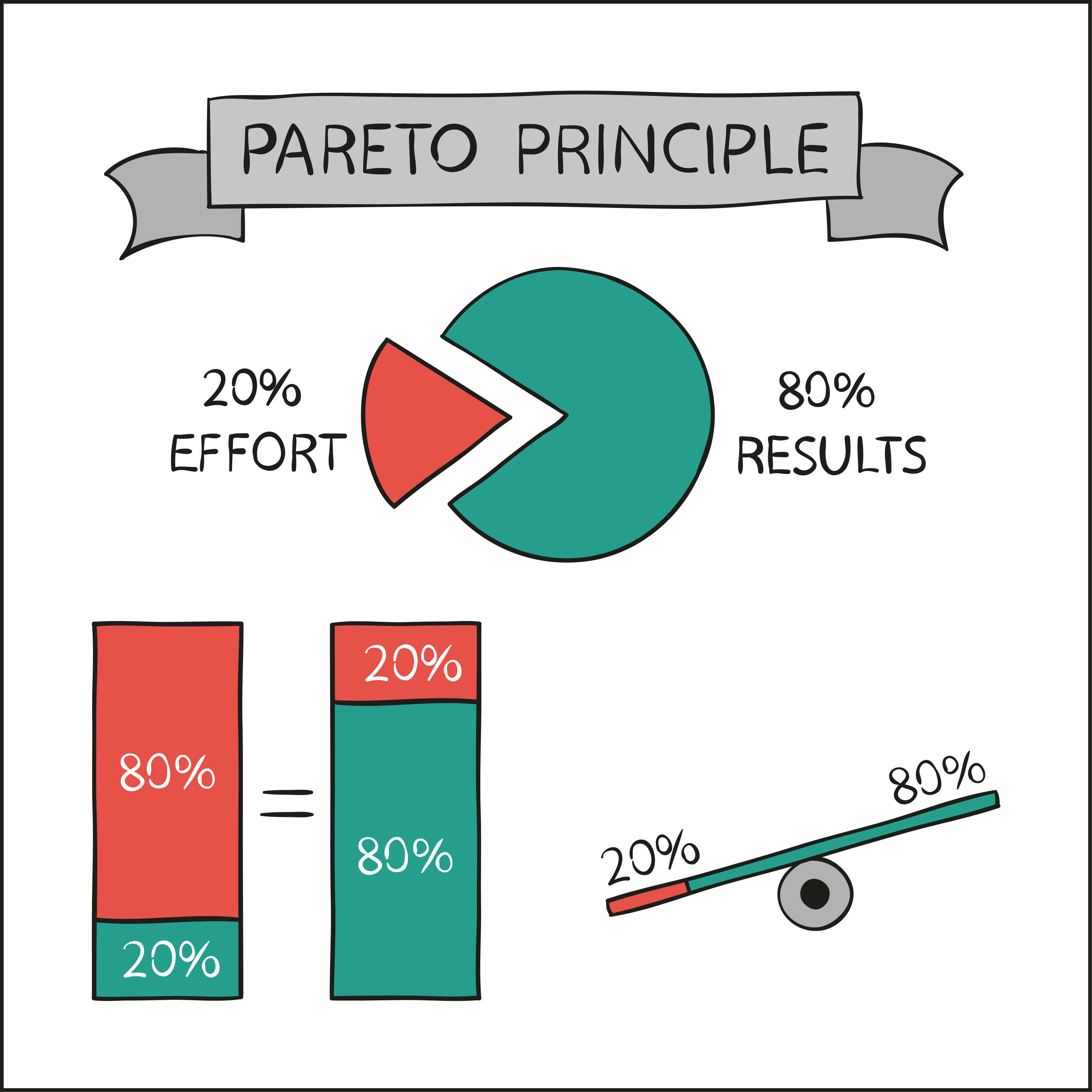
Pareto’s Law, also known as the 80/20 rule, is a principle that states that 80% of the effects come from 20% of the causes. For marketers, this means that 80% of their sales or revenue is likely generated by 20% of their customers or products. Understanding Pareto’s Law helps marketers identify and focus on the most valuable segments of their customer base or product offerings, enabling them to allocate resources more efficiently and maximise their return on investment. By leveraging this principle, marketers can prioritise their efforts on high-impact strategies and optimise their marketing campaigns for better results.
Table of contents
Open Table of contents
An example of pareto’s law
Here is an example of how it works:
Growth Method, a SaaS company, analyzed their customer base and found that 80% of their revenue came from just 20% of their clients. These top clients were primarily large enterprises that required more advanced features and dedicated support. On the other hand, the remaining 80% of clients, mostly small businesses, contributed only 20% of the total revenue. This distribution of revenue aligns with Pareto’s Law, demonstrating the 80/20 principle in action.
How does pareto’s law work?
Pareto’s Law works by helping marketers identify the most significant factors that contribute to their success. Also known as the 80/20 rule, it states that 80% of the results come from 20% of the efforts. In marketing, this means that a small percentage of customers, products, or marketing channels are responsible for the majority of the revenue and growth. By focusing on these high-performing elements, marketers can optimize their strategies, allocate resources more efficiently, and ultimately achieve better results with less effort.
Expert opinions and perspectives
Here are how some of the world’s best marketing and growth professionals think about pareto’s law.
-
“Pareto’s Principle, or the 80/20 rule, is a powerful concept that can be applied to many aspects of business, especially marketing. By focusing on the 20% of customers who generate 80% of your revenue, you can maximize your marketing efforts and increase your profits.” - Philip Kotler
-
“The Pareto Principle is a reminder that not all customers are created equal. In marketing, it’s essential to identify and prioritize the 20% of your customers who are responsible for 80% of your sales, and then tailor your marketing strategies to meet their needs and preferences.” - Seth Godin
-
“Pareto’s Law teaches us that in marketing, it’s not about trying to please everyone, but rather focusing on the key 20% of your audience that drives 80% of your results. By understanding and catering to this core group, you can achieve greater success and efficiency in your marketing efforts.” - Gary Vaynerchuk
Questions to ask yourself
As a modern growth marketing or agile marketing professional, ask yourself the following questions with regard to pareto’s law:
-
How can I identify the 20% of marketing efforts that are generating 80% of the results and focus on them?
-
Which 20% of my customer base is responsible for 80% of my revenue, and how can I better serve and retain them?
-
What are the top 20% of marketing channels that drive 80% of my traffic and conversions, and how can I optimise them?
-
Which 20% of my marketing tasks are the most critical and high-impact, and how can I prioritize them effectively?
-
How can I eliminate or delegate the 80% of low-impact marketing activities to free up more time for high-impact tasks?
See how this topic is trending on Google Trends here: https://trends.google.com/trends/explore?date=all&q=pareto%27s%20law
More questions? Connect with me on LinkedIn or Twitter, or book a Growth Call.